
Dans les systèmes mécaniques avancés, la précision de l'arbre affecte directement les performances de positionnement, stabilité en rotation, and overall equipment reliability. Especially in applications requiring compact structures and high-speed movement, even a small dimensional deviation can impact assembly accuracy and operational consistency. Donc, manufacturers need machining processes that can achieve extremely tight tolerances while maintaining stable production quality.
UN arbre mince de haute précision is designed for applications where diameter accuracy, rectitude, and surface quality are critical. Through Swiss-type machining technology, these shafts can achieve tolerances of ±0.001mm or higher precision, ensuring reliable performance in demanding mechanical systems. Caiyi Precision applies advanced CNC machining methods to support customers requiring high-quality shaft components for automotive and industrial applications.
How Swiss-Type Machining Achieves ±0.001mm Accuracy
Swiss-type machining is widely recognized for producing small, slender, and highly precise components. Unlike traditional CNC turning methods, Swiss-type machines support better material control by guiding the workpiece close to the cutting area. Par conséquent, this reduces vibration and improves machining stability when processing long and thin shafts.
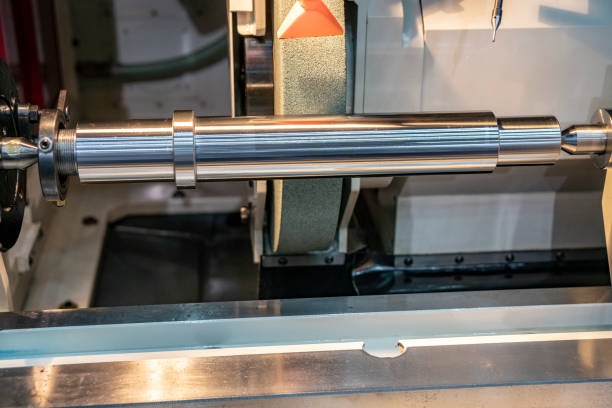
The high precision slender shaft benefits from this machining approach because the structure requires excellent dimensional control along its entire length. En outre, precise CNC turning, automated cutting, and fine grinding processes help maintain consistent diameter measurements and surface quality. Because of these advantages, Swiss-type machining is especially suitable for components that require strict tolerances, smooth rotation, and reliable integration into precision assemblies.
Key Factors Behind High Precision Shaft Performance
Achieving ±0.001mm tolerance requires multiple manufacturing factors working together. Machine stability, cutting parameter control, tool condition, material consistency, and inspection procedures all influence final component accuracy.
The following table highlights the main elements affecting shaft precision:
| Factor | Manufacturing Approach | Avantages en termes de performances |
|---|---|---|
| Swiss-type CNC machining | Stable cutting support close to machining area | Reduces vibration and improves accuracy |
| Tournage de précision | Controlled diameter machining | Maintains tight dimensional tolerance |
| Fine grinding | Optional finishing process | Enhances surface smoothness |
| Automated cutting and chamfering | Consistent production process | Improves batch reliability |
| Quality inspection | Precision measurement control | Ensures stable specifications |
De plus, careful process management helps reduce variation between production batches, making these shafts suitable for applications requiring repeatable performance.
Solid Shaft Structure Provides Strength and Stability
Unlike hollow shaft designs, this component features a solid cylindrical structure that provides excellent rigidity and mechanical strength. This design helps maintain stability under load while supporting precise motion transmission. The shaft is available in diameters ranging from φ2mm to φ10mm, with customizable lengths from 20mm to 300mm. Donc, it can be adapted to different equipment layouts and application requirements. En plus, the flat or slightly chamfered ends improve assembly convenience, while the single-end knurling design with straight or grid patterns provides enhanced grip and positioning capability during installation.
Flexible Material Options for Different Applications
Material selection plays an important role in shaft durability and operating performance. Depending on application conditions, these precision shafts can be manufactured using stainless steel such as SUS304 and SUS316, carbon steel such as 45 acier, or customized alloy steel.
Stainless steel provides excellent corrosion resistance and is suitable for environments requiring long-term stability. Meanwhile, carbon steel offers strong mechanical properties for applications where strength and cost efficiency are important. Alloy steel can also be selected when additional performance requirements are needed. Par conséquent, customers can choose suitable materials based on load conditions, environmental factors, and equipment specifications.
Surface Treatment Improves Durability and Appearance
After precision machining, surface treatment further enhances the shaft’s performance and service life. Common finishing options include polishing, galvanoplastie, noircissement, and passivation. Polishing improves surface smoothness and reduces friction during operation. En outre, nickel or chrome plating can increase corrosion resistance and provide a more durable surface layer. For specific industrial environments, blackening and passivation treatments offer additional protection. These finishing processes help ensure that the shaft maintains stable performance during continuous operation.
Applications of Swiss-Type Machined Shafts
Due to their high accuracy and compact structure, these shafts are widely used in industries requiring precision movement and reliable mechanical connection.
Typical applications include:
- Automotive Components: Used in precision transmission systems and critical mechanical assemblies.
- Automation Equipment: Supports positioning mechanisms and motion control structures.
- Medical Devices: Suitable for compact precision instruments requiring stable movement.
- Electronic Equipment: Used in small mechanical systems with strict dimensional requirements.
- Industrial Machinery: Provides accurate rotation and alignment performance.
En outre, the combination of tight tolerance control and customizable dimensions makes these shafts suitable for both standard and specialized engineering projects.
Advantages of High Precision Slender Shafts
The main benefits of this precision shaft solution include:
- ±0.001mm high accuracy tolerance capability
- Stable performance through Swiss-type machining
- Solid structure for improved rigidity
- Multiple material and surface treatment options
- Customizable diameter and length specifications
- Reliable quality for precision mechanical systems
By combining advanced machining technology with strict quality control, manufacturers can achieve consistent components that meet demanding industrial requirements.
Caiyi Precision Supports Advanced Shaft Manufacturing Needs
For industries requiring accurate, fiable, and durable mechanical components, the high precision slender shaft provides an effective solution through advanced Swiss-type machining and customized manufacturing capabilities. Précision Caiyi focuses on precision CNC turning, surface finishing, and quality inspection to deliver shaft components with excellent dimensional stability and performance. Through optimized manufacturing processes and attention to detail, these precision shafts help improve the reliability and efficiency of automotive, automation, and industrial equipment systems.