
In the world of precision manufacturing, time is the ultimate cost. Traditional methods often struggle with complex geometries and tight deadlines. However, advanced CNC machining services are changing the rules of production. By using multi-axis linkage, we can slash total processing time by up to 60%. This guide explains how Swiss-type lathes and integrated systems accelerate your project. We help you move from design to finished part faster than ever before.
1. The Traditional Workflow: A Race with Hurdles
Standard manufacturing often follows a fragmented and slow path. A complex part must travel through several different machines.
First, the part goes to a lathe for basic turning. Next, it proceeds to a milling machine for the addition of secondary features. Finally, it reaches a drill press for hole patterns. Each move requires a new setup and manual alignment. Consequently, the total labor time accumulates quickly with every step.
Furthermore, repeated clamping increases the risk of dimensional errors. Traditional “multi-machine” workflows are too slow for modern industry. Therefore, they often lead to long lead times and higher costs.
2. The Integration Power of Swiss-Type Machining
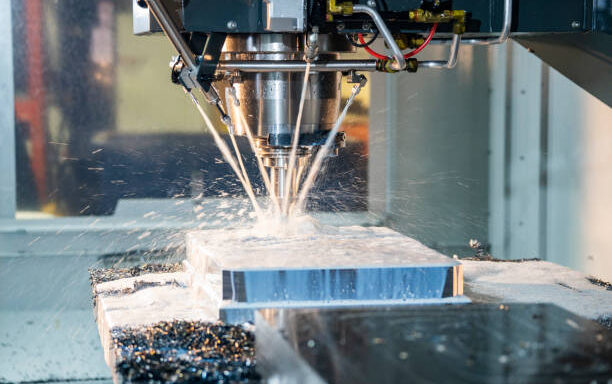
Modern CNC machining services use integrated Swiss-type technology to solve these bottlenecks. This system combines multiple operations into a single, powerful machine.
One-Time Clamping Excellence
We complete all required operations in a single setup. The machine handles turning, milling, and drilling without releasing the part. Consequently, we eliminate the downtime between different machine stations. This ensures perfect concentricity and superior surface finishes. Therefore, the part remains accurate from the first cut to the last.
Simultaneous Multi-Tool Cutting
Advanced machines can utilize multiple tools simultaneously. For example, the system can turn an outer diameter while milling a side slot. Furthermore, it can perform cross-drilling during the main turning cycle. This “overlap” of tasks cuts the active cycle time in half. As a result, you get more parts per hour with less machine wear.
Dual-Spindle Synchronized Processing
The machine features both a main spindle and a sub-spindle. While the main spindle finishes the front of the part, the sub-spindle works on the back. Both ends of the component undergo machining simultaneously. Consequently, the part drops off the machine when it is finished. You do not need secondary manual operations for the back side.
3. The Impact: 60% Faster Delivery
When you eliminate manual handling and tool changes, the efficiency skyrockets. Multi-axis systems provide a massive competitive advantage for your business.
-
Lower Labor Costs: One operator manages a highly automated, multi-tasking system.
-
Higher Precision: Single-clamping eliminates the cumulative errors associated with multiple setups.
-
Rapid Prototyping: You receive your complex samples in days, not weeks.
Therefore, choosing integrated CNC machining services is a strategic move. It allows you to respond to market demands with incredible speed. You reduce your inventory needs by producing parts on demand. Consequently, your overall project ROI improves significantly.
Conclusion: Redefining Manufacturing Speed
Complexity no longer has to mean a long and painful wait. Multi-axis technology has finally broken the speed barrier in precision engineering.
Stop wasting weeks on fragmented production schedules. Embrace the power of synchronized, one-stop CNC machining services today. You gain better accuracy, lower costs, and much faster market entry. Your most complex designs deserve the most efficient production path. Let advanced technology bring your blueprints to life in record time.