
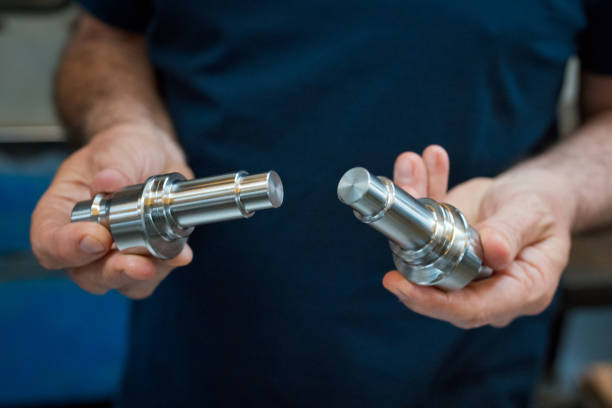
In high-performance mechanical assemblies, a micro shaft must endure intense rotational speeds, repetitive structural loads, and corrosive environments. Because bare steel surfaces quickly fail under these stresses, engineers must utilize specialized surface modifications. Selecting the correct treatment shields your custom hardware from catastrophic wear and preserves critical design tolerances.
The Hidden Dangers Facing Unprotected Steel
Without proper finishing, precision micro shafts remain highly vulnerable to:
-
Rapid corrosion and oxidation
-
Friction-induced abrasive wear
-
Premature fatigue cracking
-
Dimensional instability over time
-
Suboptimal lubrication performance
1. Micro Shaft Surface Treatment Selection Matrix
To streamline your procurement and precision shaft design process, use this technical breakdown to match your specific application scenario with the ideal industrial coating:
| Application Scenario | Recommended Treatment | Key Engineering Advantages | Relative Cost Level |
| Indoor Transmission Systems | Zinc Plating / Black Oxide | Basic anti-rust protection, economical | Low |
| High-Speed & High-Wear Gears | Chrome Plating / Nitriding | High surface hardness, excellent heat resistance | Medium to High |
| Outdoor or Humid Environments | Chrome Plating / Electrophoresis | Premium long-term corrosion resistance | Medium |
| Food, Medical & Cleanrooms | Stainless Steel Passivation | Non-contaminating, salt-spray resistant | High (Material Dependent) |
| Extreme Wear + Corrosive Zones | Ni-P-PTFE Composite Coating | Ultra-low friction, dense anti-corrosion layer | High |
2. Deep-Dive Analysis of Core Surface Treatments
Zinc Plating: Low-Cost Protection for General Applications
-
Best For: Consumer electronics, indoor equipment, and low-moisture transmission systems.
-
Technical Breakdown: Zinc plating offers a highly economical solution for carbon steel shafts. The applied layer acts as a sacrificial coating, which stops the underlying steel substrate from oxidizing.
-
Key Limits: This treatment provides limited wear resistance. Furthermore, because zinc plating adds several microns of thickness to the diameter, engineers must calculate precise dimensional allowances before manufacturing.
Black Oxide: Total Dimensional Stability for Tight Tolerances
-
Best For: Precision assemblies, optical instruments, and electronic devices requiring interference fits.
-
Technical Breakdown: Black oxide treatment chemicalizes a microscopically thin layer on the steel surface. Because it causes almost zero dimensional change, it remains the top choice for miniature shafts requiring perfect concentricity.
-
Key Limits: It delivers lower corrosion resistance than electroplating. Therefore, it requires an additional oil seal to provide adequate long-term protection.
Chrome Plating: High Hardness and Abrasive Wear Resistance
-
Best For: High-speed electric motor shafts, sliding contact components, and high-heat environments.
-
Technical Breakdown: Hard chrome plating deposits a rugged, low-friction barrier over the shaft. This coating drastically improves abrasion resistance during intense mechanical operation.
-
Key Limits: Processing costs run higher, and the additional layer increases the final shaft diameter significantly.
Nitriding: Thermochemical Hardening Without Distortion
-
Best For: Aerospace components, automation systems, and high-load transmission gear.
-
Technical Breakdown: Nitriding diffuses nitrogen directly into the steel surface. Unlike traditional heat treatments, this method achieves an incredibly hard outer case while maintaining a tough, resilient core. Consequently, typical surface hardness reaches:
$$\text{HRC } 58 \sim 62$$ -
Key Links: Nitriding produces minimal distortion, which greatly reduces post-machining grinding requirements compared to traditional carburizing.
Passivation for Stainless Steel Shafts
-
Best For: Medical devices, semiconductor equipment, and food-grade machinery.
-
Technical Breakdown: Passivation acidifies the shaft surface to strip away free iron. This chemical process enhances the steel’s natural chromium oxide protective layer without adding any measurable coating thickness.
-
Key Limits: This treatment does not increase surface hardness. It relies entirely on the premium cost of the underlying stainless steel substrate.
Ni-P-PTFE Composite Coating: Advanced Tribological Technology
-
Best For: Next-generation automation, long-life rotating systems, and highly aggressive environments.
-
Technical Breakdown: This advanced electroless nickel-phosphorus coating integrates sub-micron PTFE particles. Studies on medium-carbon steel motor shafts prove that this composite barrier delivers exceptional anti-wear behavior and handles neutral salt spray testing up to 48 hours.
3. Avoiding Critical Tolerances Traps
One of the most common pitfalls in precision shaft procurement is ignoring coating growth. Engineers must divide treatments into two distinct geometric categories:
-
Zero to Minimal Growth: Passivation, Black Oxide, and Nitriding.
-
Measurable Diameter Growth: Zinc Plating, Chrome Plating, and Composite Nickel Coatings.
Even a variance of two microns can ruin a press-fit assembly, destabilize a bearing clearance, or disrupt rotational balance. Consequently, the engineering team at Caiyi meticulously compensates for coating growth during the initial CNC turning and high-precision grinding phases. This proactive step guarantees that your components fit perfectly after receiving their final surface treatment.
4. Optimizing the Machining Sequence
Heat treatments dramatically improve mechanical performance, but they also harden the metal. After nitriding or hardening, the material resists traditional cutting tools, which accelerates tool wear and inflates final grinding costs.
Therefore, proper process planning is vital. Caiyi evaluates four distinct parameters before launching production on any custom project:
-
Raw material grade compatibility
-
The exact surface treatment sequence
-
Tolerance stack-up calculations
-
Real-world final application conditions
Conclusion: Partner with Caiyi for Custom Precision Shaft Solutions
Choosing the right micro shaft surface treatment requires balancing corrosion resistance, mechanical wear, dimensional precision, and total production cost.
As a premier custom precision machining manufacturer, Caiyi Precision Machining provides an integrated, one-stop solution for global industries. We specialize in:
-
High-speed CNC turning and micro shaft machining
-
Tight-tolerance grinding and dimension holding
-
Seamless surface treatment and heat treatment coordination
-
Rigorous precision inspection and quality control
Bring your precision designs to life. Partner with Caiyi today to optimize your hardware performance and secure a reliable supply chain from prototype to mass production.