

In the traditional landscape of metalworking, “efficiency” was once measured solely by the speed of production. Today, however, a new metric has emerged at the forefront of the global industrial agenda: resource circularity. For the automotive sector, which faces unprecedented pressure to reduce carbon footprints across the entire supply chain, every gram of wasted metal represents both a financial loss and an environmental debt.
In this context, automotive Swiss turning components have redefined the “Green Manufacturing” standard. By integrating Minimum Quantity Lubrication (MQL), high-precision chip management, and energy-efficient drive systems, Swiss-type machining has evolved from a niche horological technique into a cornerstone of sustainable mass production. This process moves beyond traditional subtractive manufacturing toward a “near-net-shape” philosophy, pushing raw material utilization to an astounding 99%.
1. The Resource Paradigm: Beyond the Traditional Lathe
To understand the green revolution of automotive Swiss turning components, one must first acknowledge the inherent waste in conventional CNC turning. In standard setups, large volumes of flood coolant are used to dissipate heat, often leading to contaminated metal chips that are difficult to recycle and hazardous coolant waste that requires expensive disposal.
The Swiss Advantage
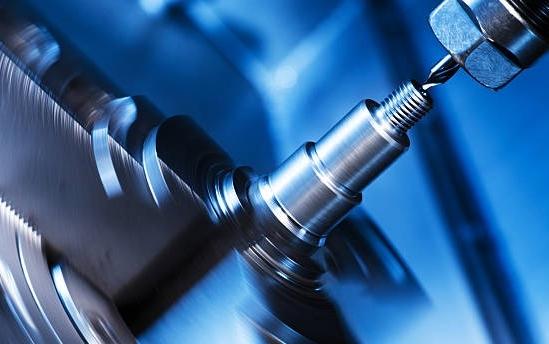
Swiss turning operates on a sliding headstock principle. The material is supported by a guide bushing immediately adjacent to the cutting tool.
-
The Action: This structural rigidity allows the machine to remove material with extreme precision, often eliminating the need for secondary grinding or finishing processes.
-
The Result: By reducing the number of production steps, Swiss turning inherently lowers the “cumulative energy demand” of each part, ensuring that the journey from bar stock to finished component is as direct as possible.
2. Minimum Quantity Lubrication (MQL): The End of “Flood” Waste
The most visible shift toward green manufacturing in Swiss-type shops is the adoption of Minimum Quantity Lubrication (MQL), often referred to as “near-dry machining.”
The Mechanism of Precision Misting
Instead of drenching the entire work area in gallons of cutting oil, MQL systems deliver a precise, high-pressure mist of biodegradable lubricant directly to the tool-tip interface.
-
Aerosol Efficiency: The system uses only a few milliliters of oil per hour. This mist provides the necessary lubricity to reduce friction without creating a “lake” of waste fluid.
-
Thermal Control: Because MQL utilizes the evaporation of the lubricant and high-pressure air to carry away heat, the resulting automotive Swiss turning components emerge clean and dry. This eliminates the energy-intensive “parts washing” cycle, further reducing the factory’s carbon footprint.

3. The Geometry of Waste: Turning Scraps into Secondary Resources
One of the greatest challenges in the circular economy is the “purity” of waste streams. In traditional machining, metal chips are often “birds-nested,” tangled, and soaked in synthetic coolants, making them low-value scrap.
Controllable Chip Morphology
Because Swiss-type lathes allow for extremely fine control over feed rates and spindle speeds, technicians can program the “break” of the chip.
-
Uniformity: Swiss turning typically produces small, consistent, “6-shaped” or “C-shaped” chips.
-
Ease of Recovery: These uniform chips are easily transported by automated conveyors into centrifuges.
-
High Purity: Because MQL uses minimal oil, the chips remain “clean.” When a factory processes automotive Swiss turning components made of high-grade stainless steel or titanium, these clean chips can be melted down and returned to the supply chain with almost zero loss in material quality.
Environmental Impact: This high-value recycling loop is the key to reaching 99% material utilization. The “waste” is no longer trash; it is simply “pre-melted raw material.”
4. High-Efficiency Drive Systems: Reducing the Kilowatt-per-Gram Ratio
Sustainability is as much about energy as it is about matter. Modern Swiss-type machines utilize advanced servo-driven motors and high-frequency spindles that maximize torque while minimizing electrical consumption.
Synchronous Spindle Technology
Standard machines often waste energy through friction in belt drives or heat generation in inefficient motors.
-
Direct Drive: Modern Swiss lathes employ built-in motor spindles. This eliminates mechanical transmission loss.
-
Regenerative Braking: Many high-end CNC controllers now capture the energy generated during spindle deceleration and feed it back into the factory grid.
-
Outcome: For a high-volume order of automotive Swiss turning components, these micro-savings in electricity per part aggregate into massive reductions in the factory’s Scope 2 emissions.
5. Meeting the Carbon Footprint Pressure of the Automotive Supply Chain
The global automotive industry is undergoing a “Green Audit.” Tier 1 and 2 suppliers are now required to provide detailed Life Cycle Assessments (LCA) for every part, from a simple sensor housing to complex fuel injection components.
Swiss Turning as a Strategic Tool
Utilizing Swiss turning technology allows manufacturers to meet these “Green Procurement” requirements effortlessly.
-
Weight Reduction: The precision of Swiss turning allows for thinner wall thicknesses and more complex geometries, enabling the “lightweighting” of vehicles which directly reduces fuel consumption or increases EV range.
-
Chemical Reduction: By eliminating traditional coolants, factories remove harmful VOCs (Volatile Organic Compounds) from the workspace, improving employee health and reducing the need for complex air filtration systems.
6. Conclusion: The Future is “Near-Net” and Circular
The shift toward 99% material use is now a practical reality. By optimizing tools, lubricants, and waste, Swiss turning maximizes precision. Consequently, automotive components achieve unmatched efficiency and purpose. As industries embrace a circular economy, “by the gram” manufacturing leads. wiss turning shows that speed does not sacrifice environmental responsibility.
Instead, precision becomes the ultimate form of material conservation. Thus, steel bars transform into highly efficient, sustainable resources.