

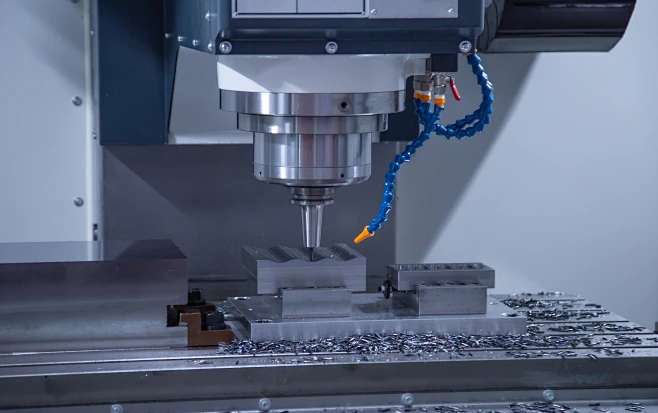
As global demand for high-performance components continues to grow, the precision machining industry is entering a new stage of technological innovation and quality enhancement. Driven by the rise of electric vehicles, medical devices, aerospace technology, and intelligent electronics, manufacturers worldwide are investing more in high-precision Swiss-type machining, multi-axis processing, and zero-defect quality control.
Industry Trends in 2025
✔ High-Precision Requirements
Industries such as aerospace, new energy vehicles, and medical equipment now require tolerances as tight as 0.001mm, pushing CNC processing technology to higher standards.
✔ Surge in Multi-Axis Machining Demand
5-axis and 6-axis machining centers are becoming mainstream, as they allow complex geometry processing, faster prototyping, and greater material efficiency.
✔ Medical & Automotive Components Lead the Market
According to recent market data, medical precision components and automotive structural parts are expected to account for over 55% of global precision machining demand in 2025.
✔ Shift Toward Mass Customization (ODM / OEM)
More customers are seeking ODM/OEM services, requiring not only manufacturing capabilities but also engineering evaluation, prototype validation, and technical support.
Quality Control Becomes a Core Competitiveness
Industry experts agree that quality assurance is now the key to maintaining global competitiveness. More manufacturers are implementing ISO-standard multi-level QC processes, including:
-
Dimensional inspection
-
Surface treatment verification
-
Material traceability
-
Assembly and functional testing
Companies that can provide both precision and stability are expected to stand out in international markets.